Backyard Greenhouse - Part 2: Foundation & Frame

Welcome to a series of blogs about Cultivate Cochrane president Jackie Skrypnek’s backyard greenhouse building process. The intent is to share a realistic account of one couple’s experience to help inspire and inform other community members in their own season-extending, food-producing ventures.

IMG_5270.jpg

With a design in place and the frost out of the ground, it was time to take our little greenhouse from plan to reality. In preparation, I had scoured Kijiji for materials we might be able to use both to save money and to lighten the footprint of resources. I had high hopes of finding a large stash of free bricks, a suitable window or door, or foam insulation otherwise destined for the landfill. But my searches turned up nothing reasonably useful or cost-saving. We had to remember that the reason we were going to the considerable expense of building with passive solar design was to create a really efficient structure that could hold heat well in our shoulder seasons. If we put in a leaky window, warped boards where air would infiltrate, or patchy insulation to save a few bucks it would somewhat defeat the purpose of spending money on the project in general.

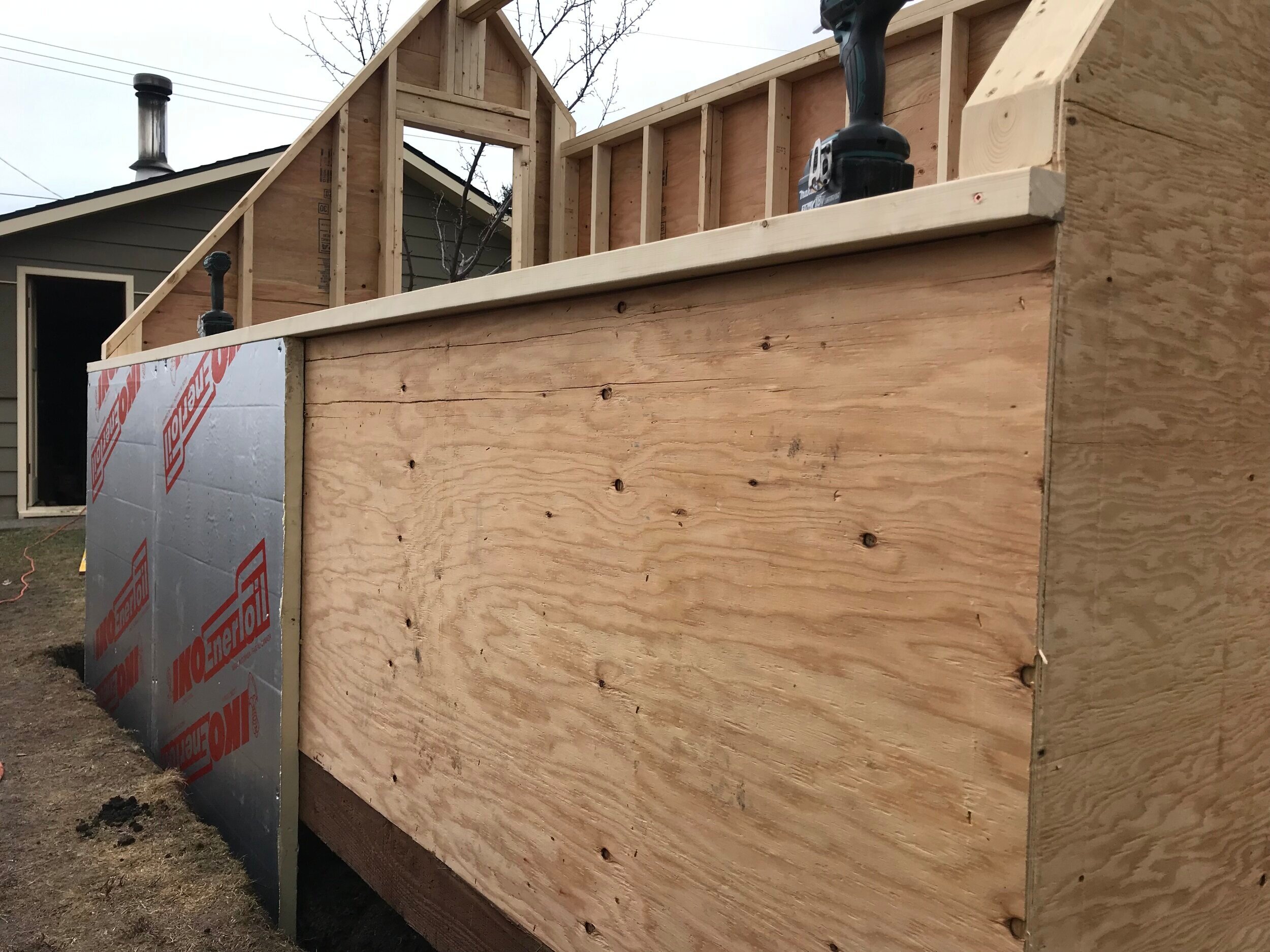
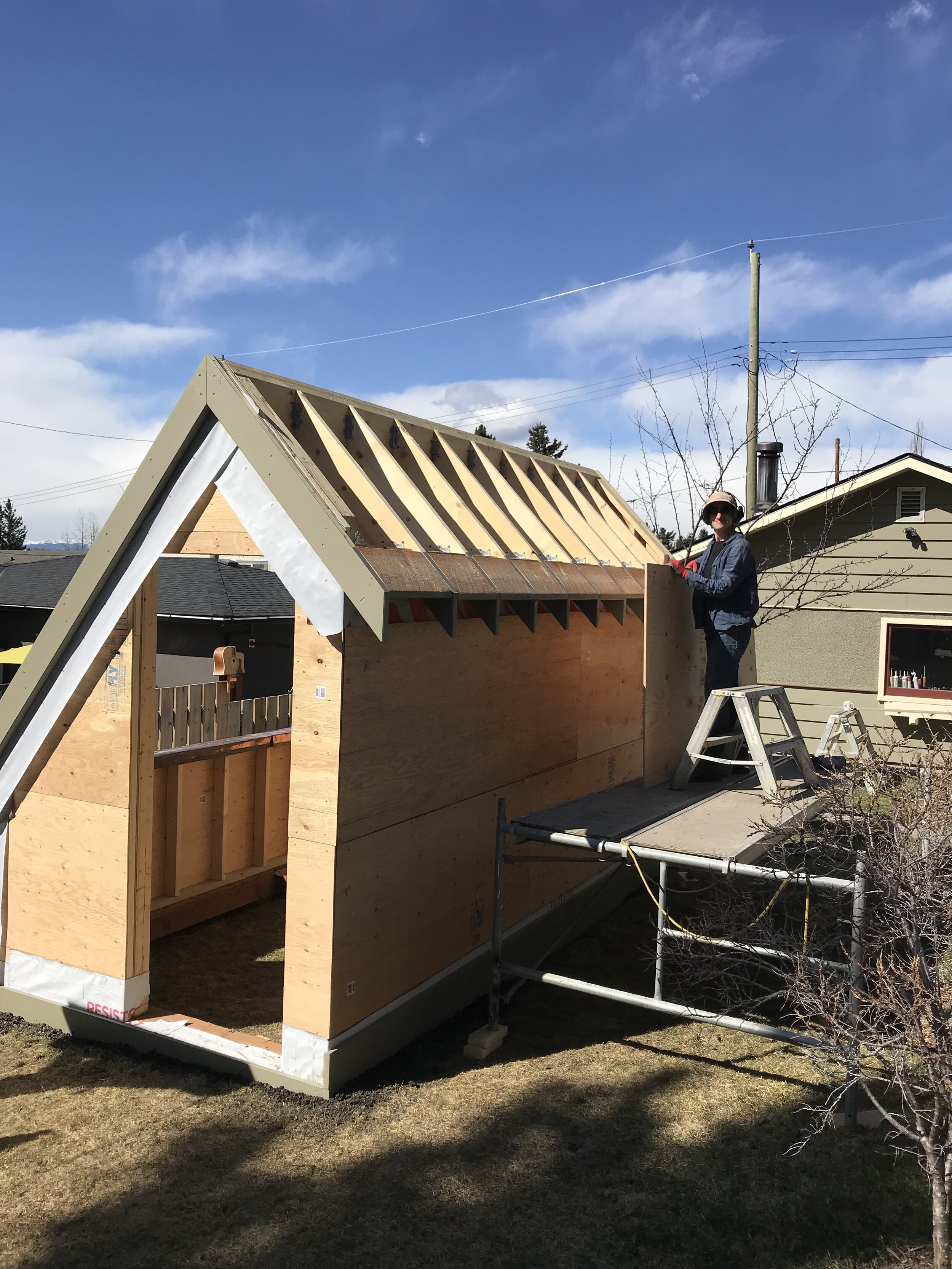
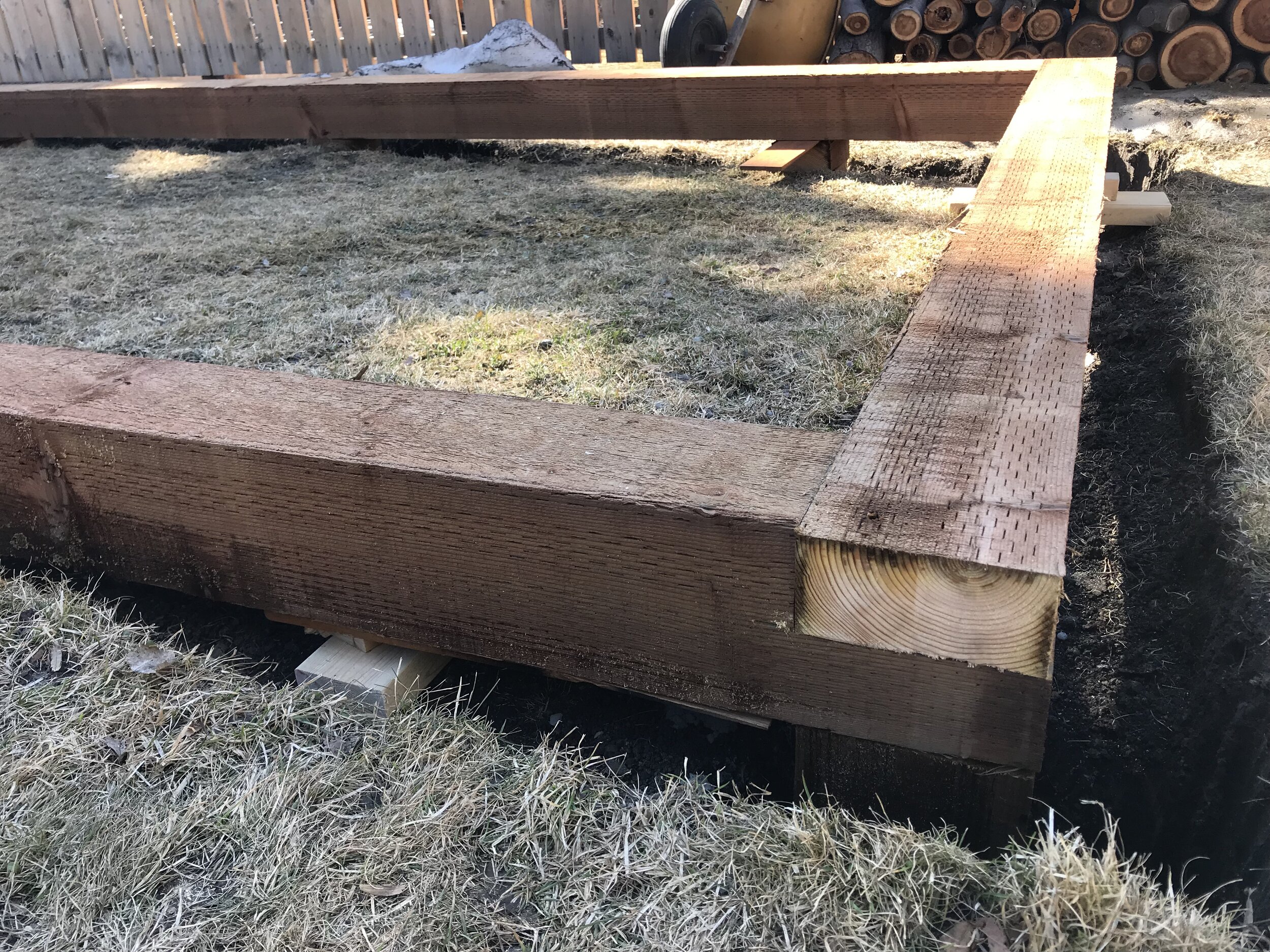
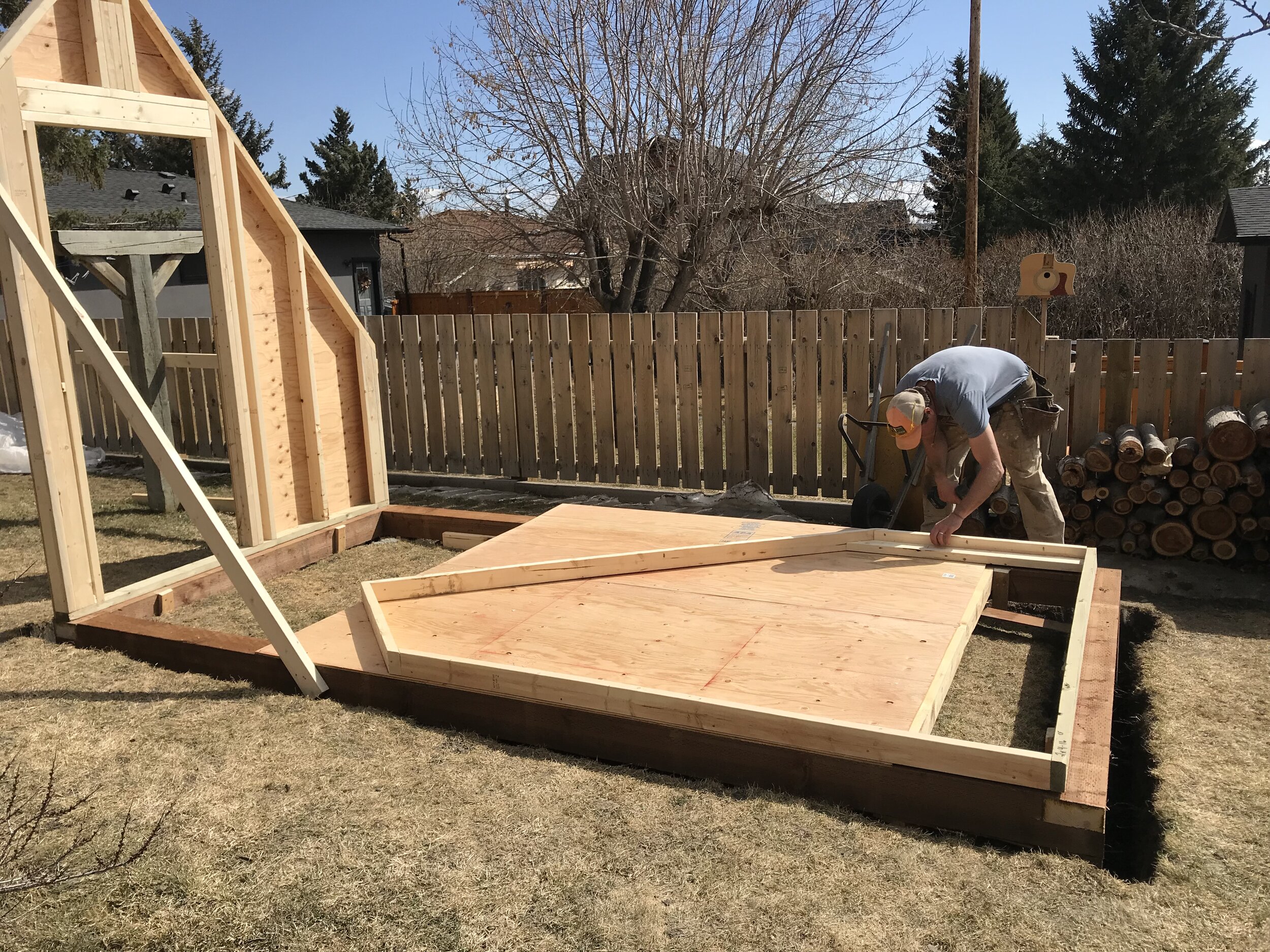
So, new building materials amassed, we began. We constructed a perimeter foundation of treated 6x6’s (nearly the only place we used treated lumber) levelled on 6 posts each on a concrete footing in the ground. Ideally a passive solar greenhouse is insulated to some degree from the frost below ground and there are several options for doing this. We chose to excavate a perimeter trench just wide enough to slip foil-backed foam insulation down as deep as possible. After several hours of work using a digging bar and a shop vac to help bring the soil up and out, we called it quits at a depth of about two feet. It would have to suffice! The upside of this foundation and insulation method is that it took minimal materials - just 6 bags of concrete, some wood and the insulation.

As a side note, installing a solid floor such as poured concrete is not recommended for optimal and ecological greenhouse function. Allowing your growing beds to access the subsoil is important for nutrient cycling and soil microbiology, plus the earth itself will act as uninterrupted thermal mass, storing excess greenhouse heat (at least as far down as the insulation runs). A concrete floor also inhibits drainage and comes with an immense embodied energy footprint.
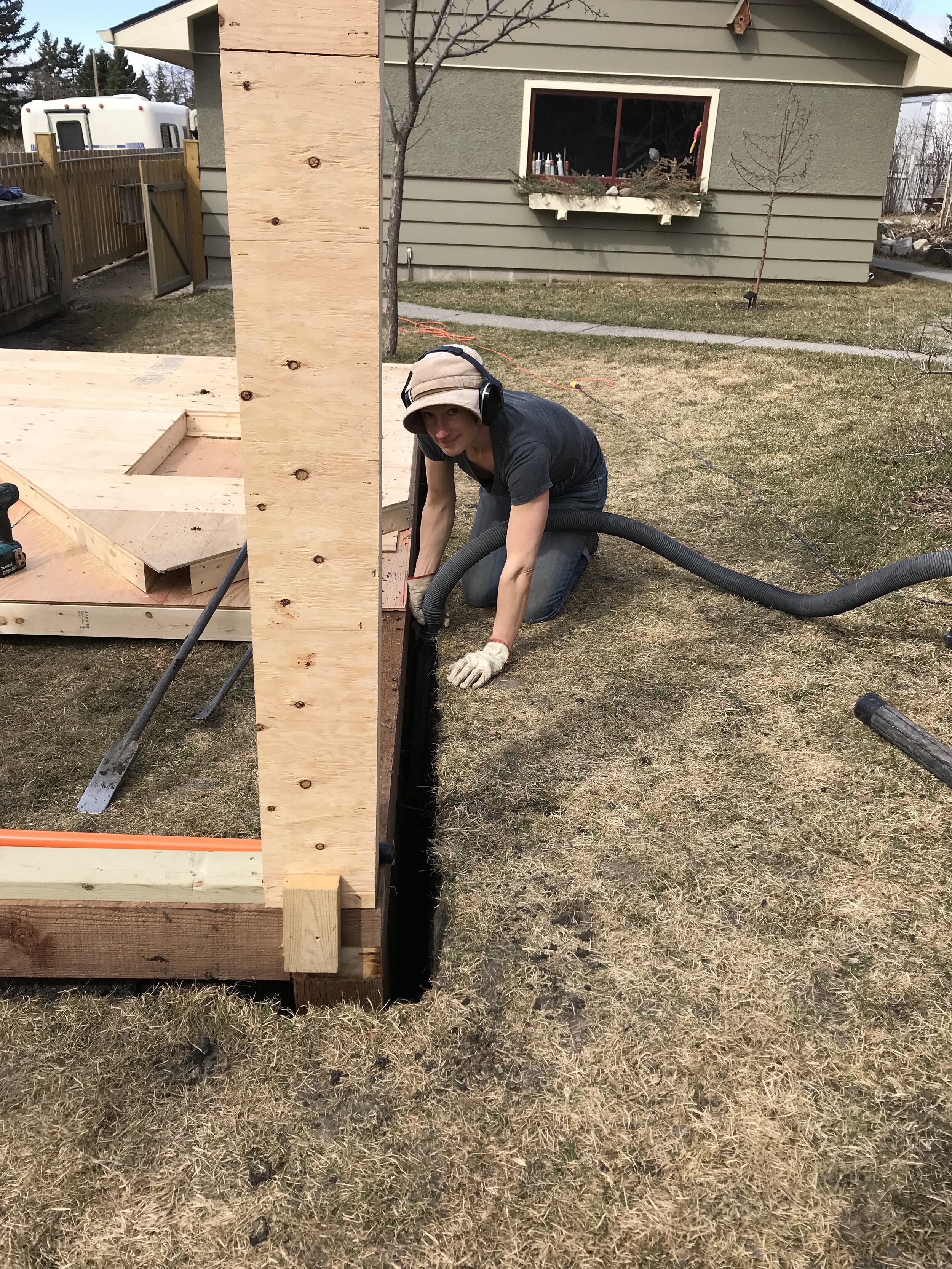
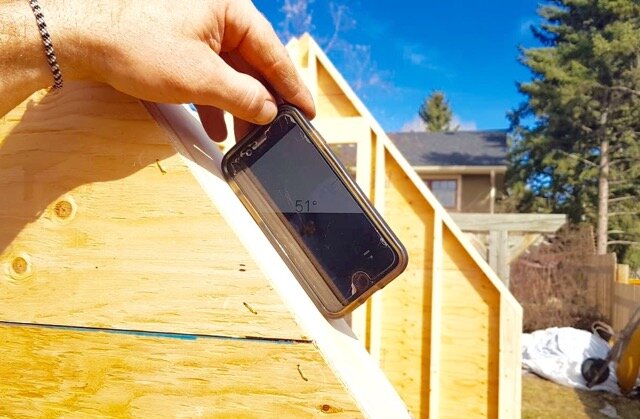
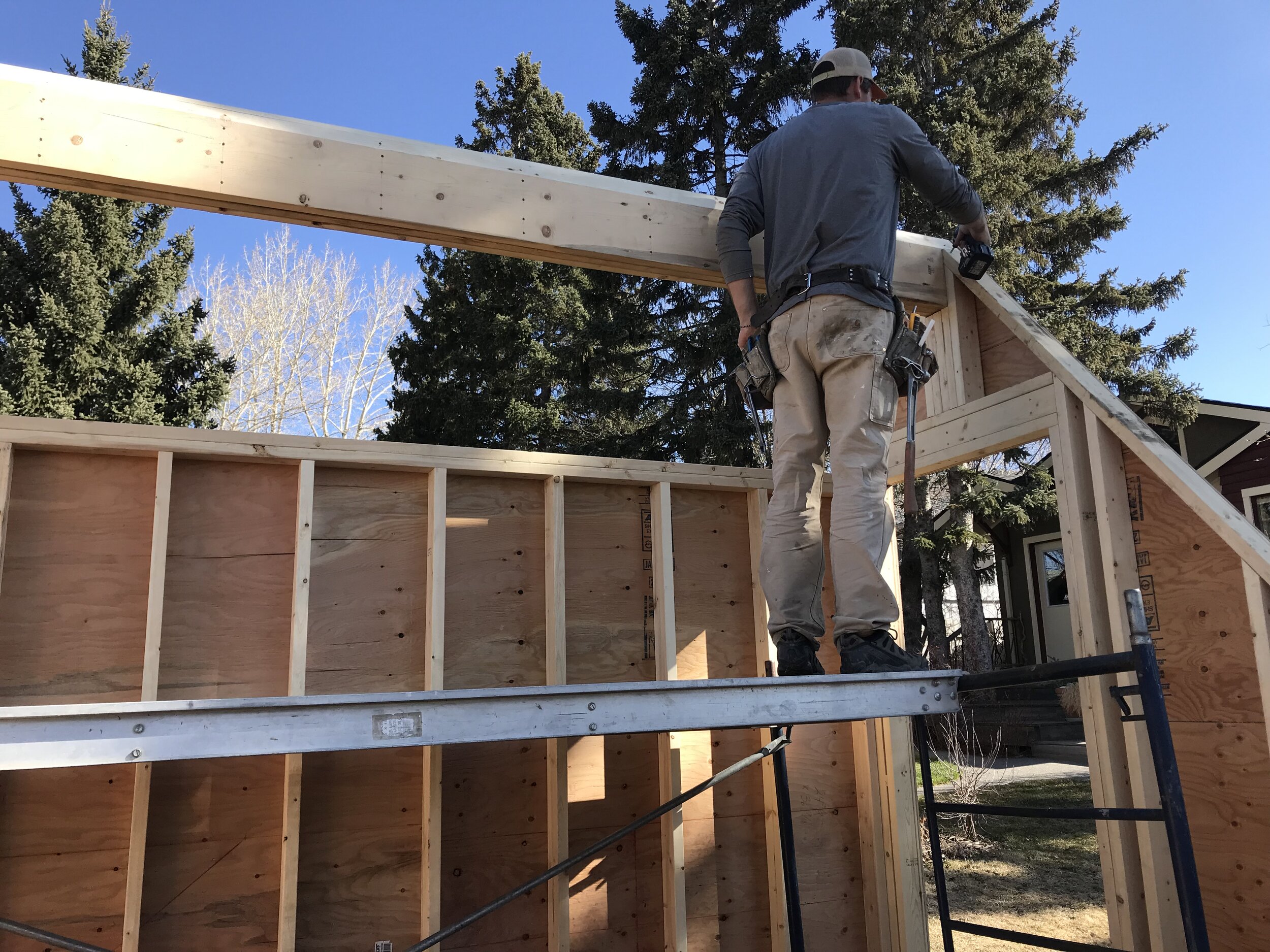
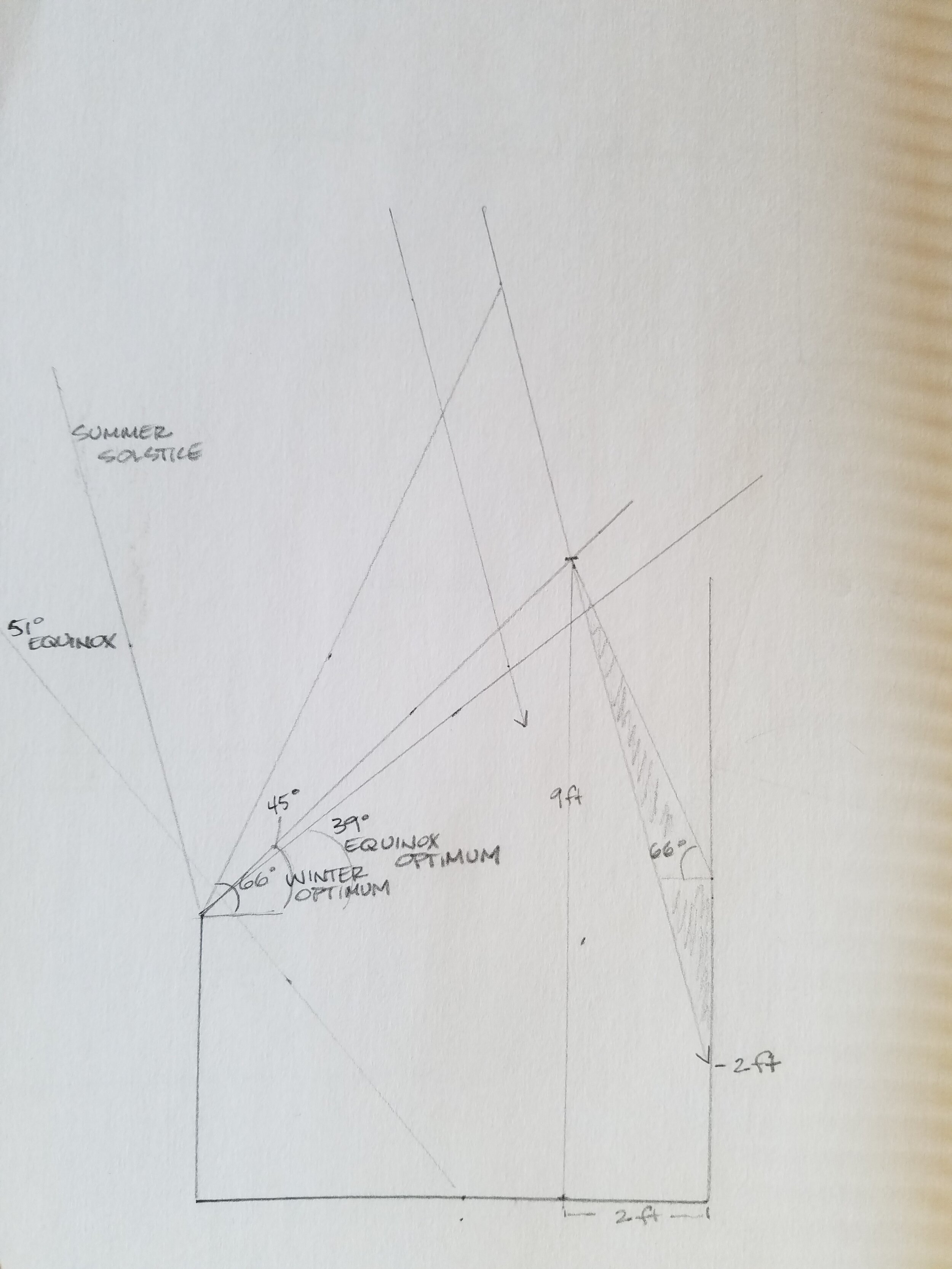
The walls went up quickly at this point, laid out first on plywood to ensure meticulous measurements and a perfect fit for subsequent stages. The angle of our south face took shape and we confirmed it to be 51º from horizontal, as planned. This angle means the glazing will be perpendicular to the angle of the sun (and thus receive maximum solar heat gain) sometime between equinox and winter solstice. We hope this will prove to be about right!
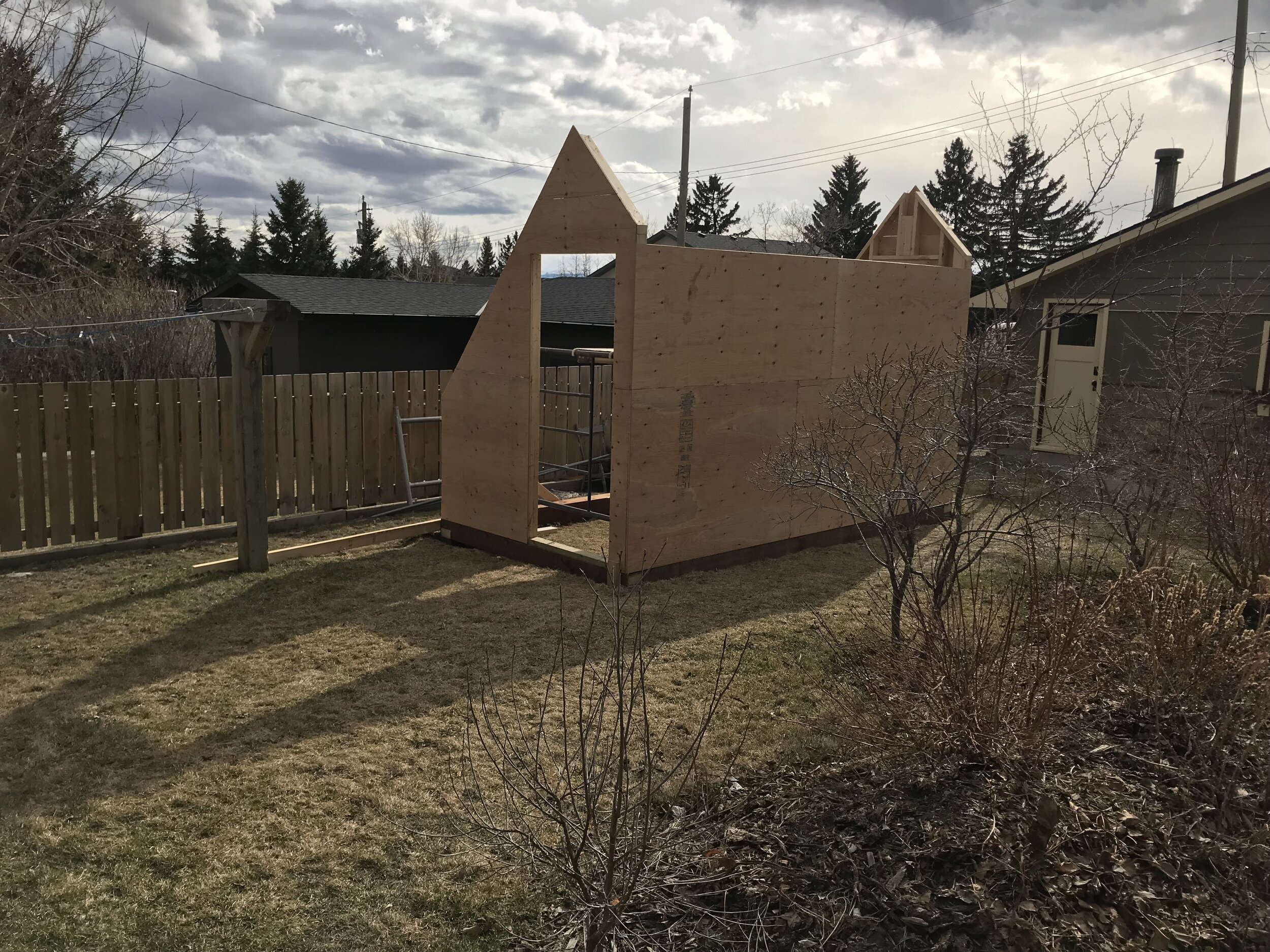
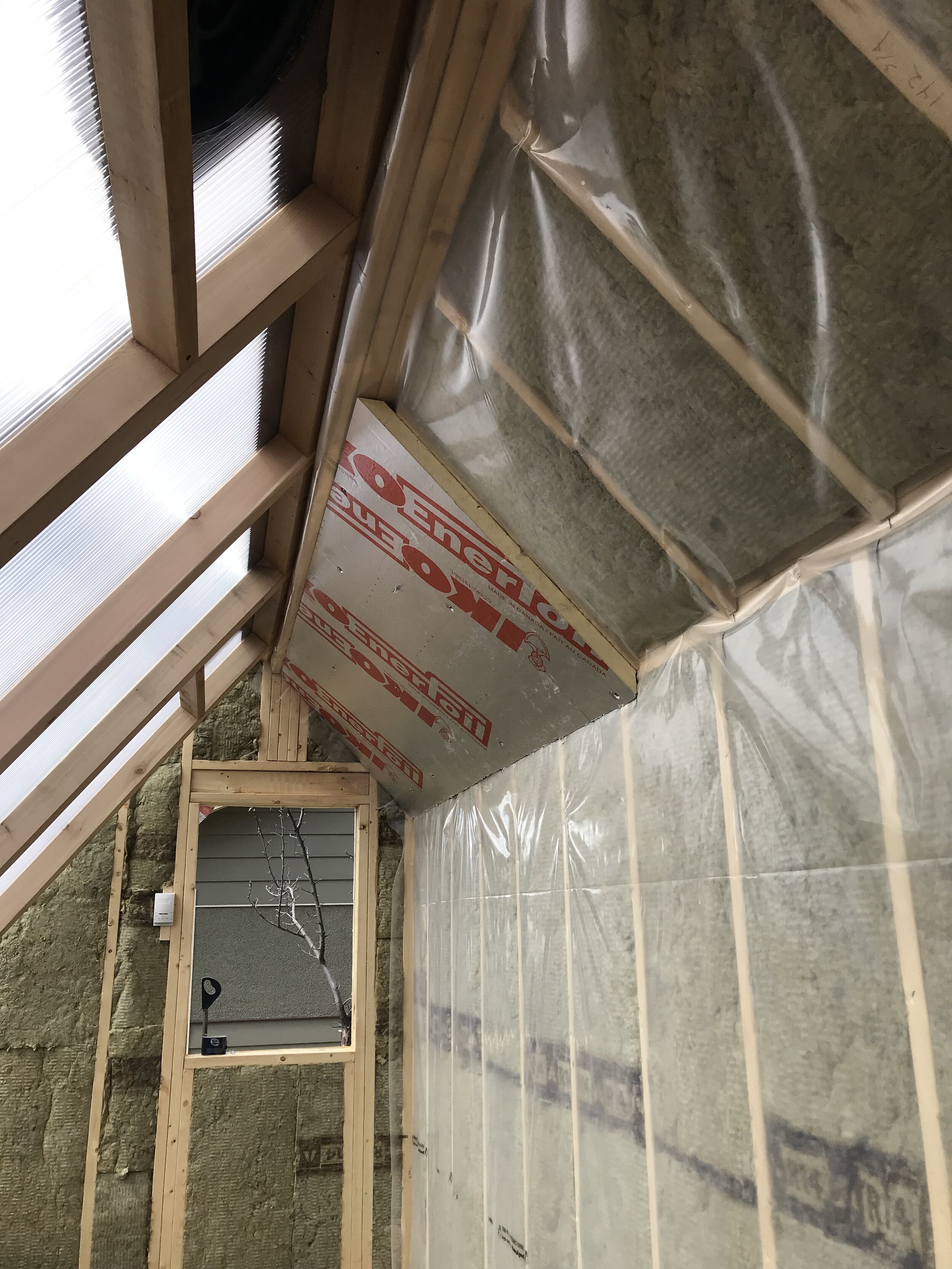
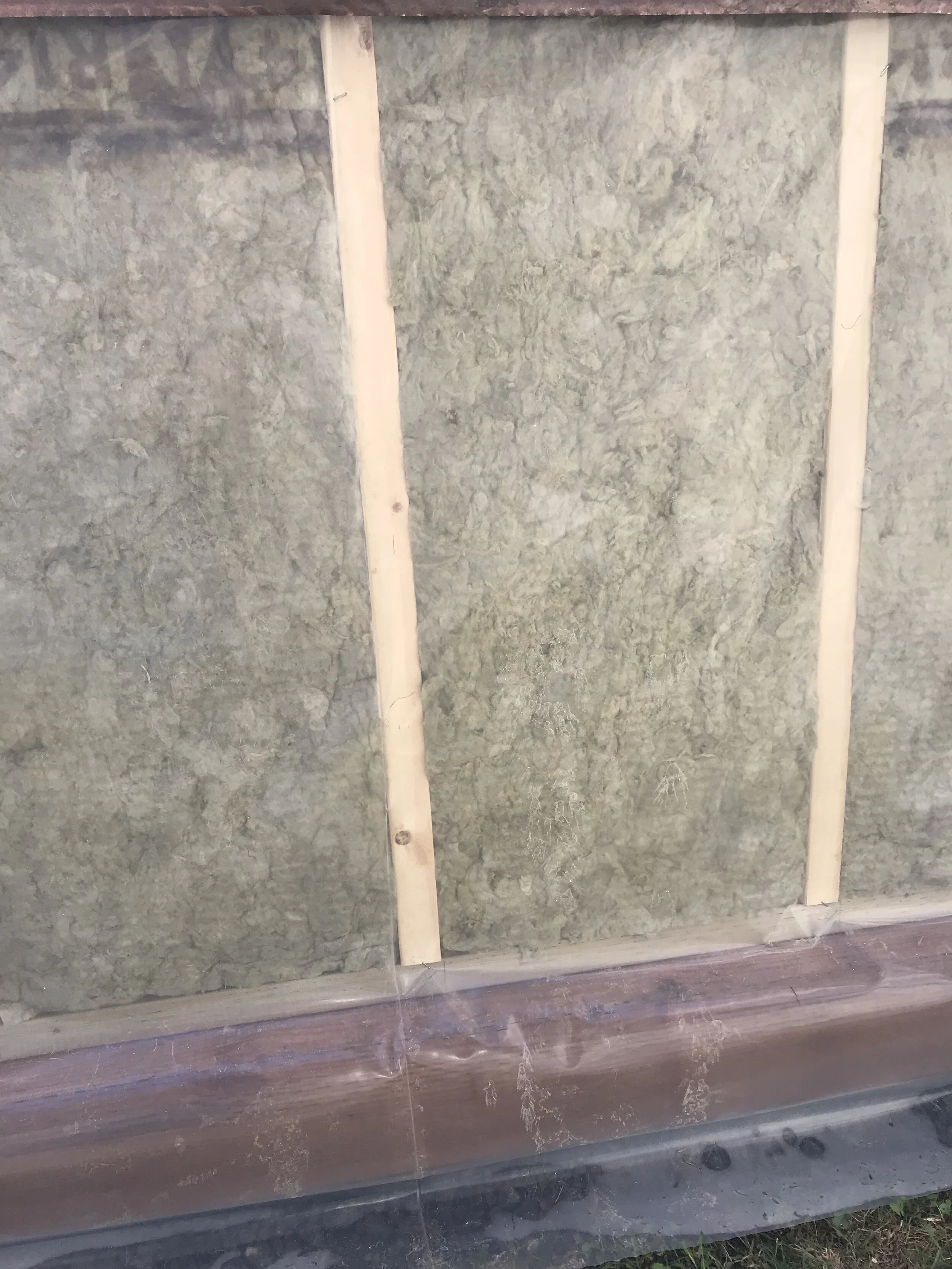
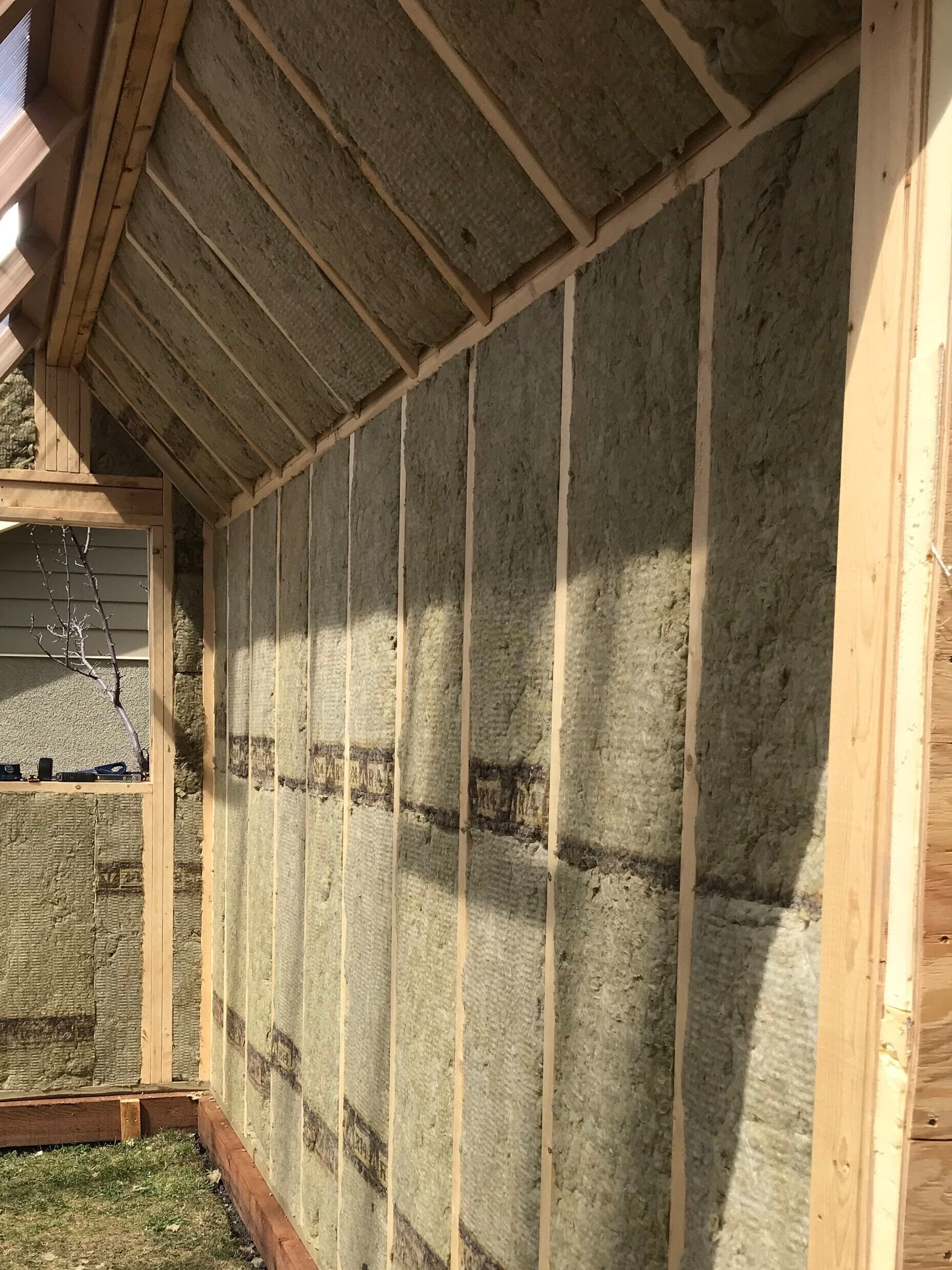
To insulate our walls we chose to use Rockwool on the interior and foil-backed rigid foam (brand name Enerfoil) across the exterior to prevent thermal bridging through the studs. The north roof, although small, is a high point where much of our heat could escape so it received a double layer of Rockwool followed by rigid foam. Neither of these products is particularly “green” yet we chose them for a combination of reasons. Both are resistant to moisture, thus suitable for a greenhouse environment, they both offer good insulative value per inch of thickness and dollar spent, and they are less environmentally problematic than some of their counterparts. They allowed us to achieve good R-value while keeping our wall depth to 6” so we’d be left with adequate growing space inside.
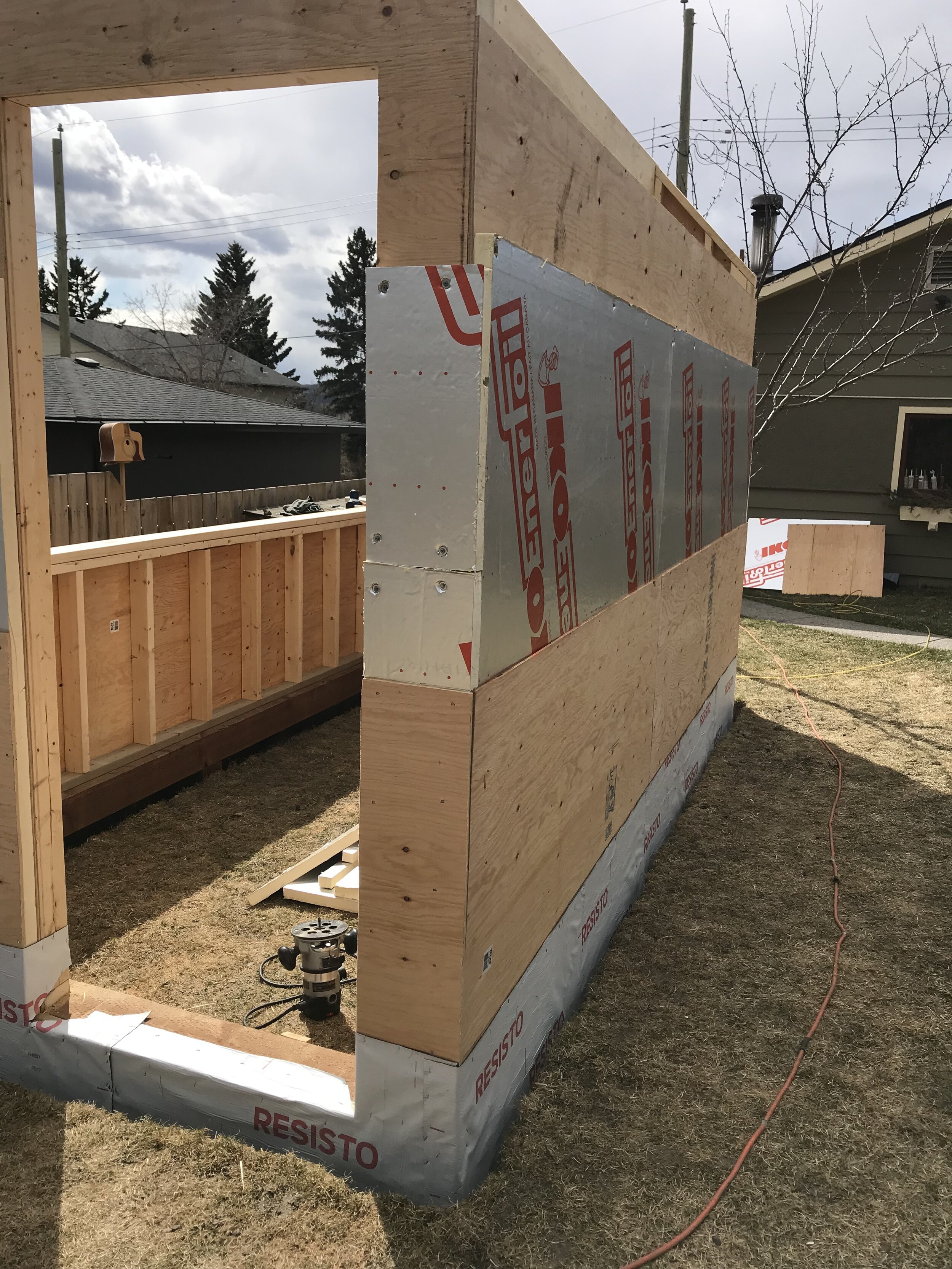
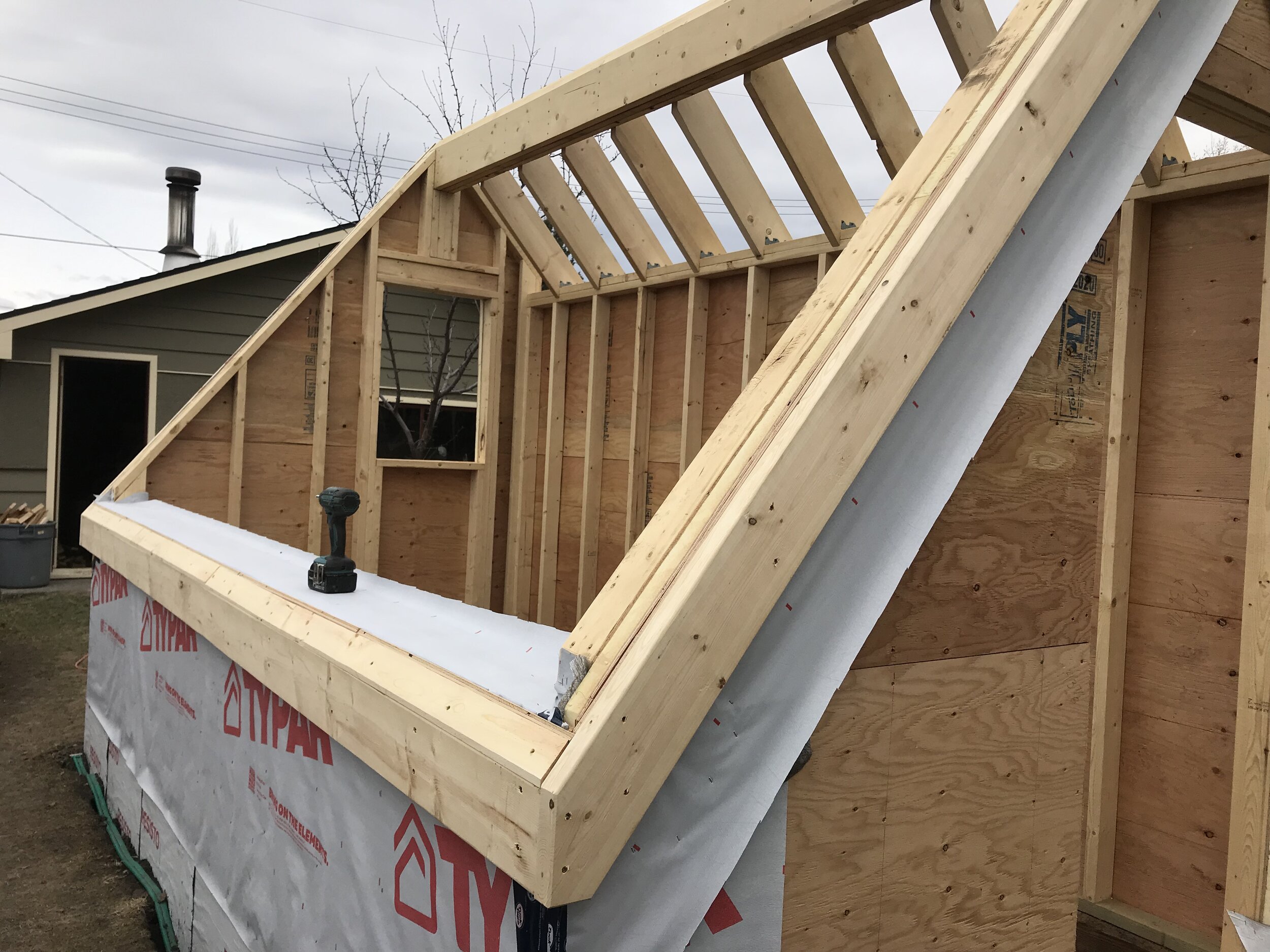
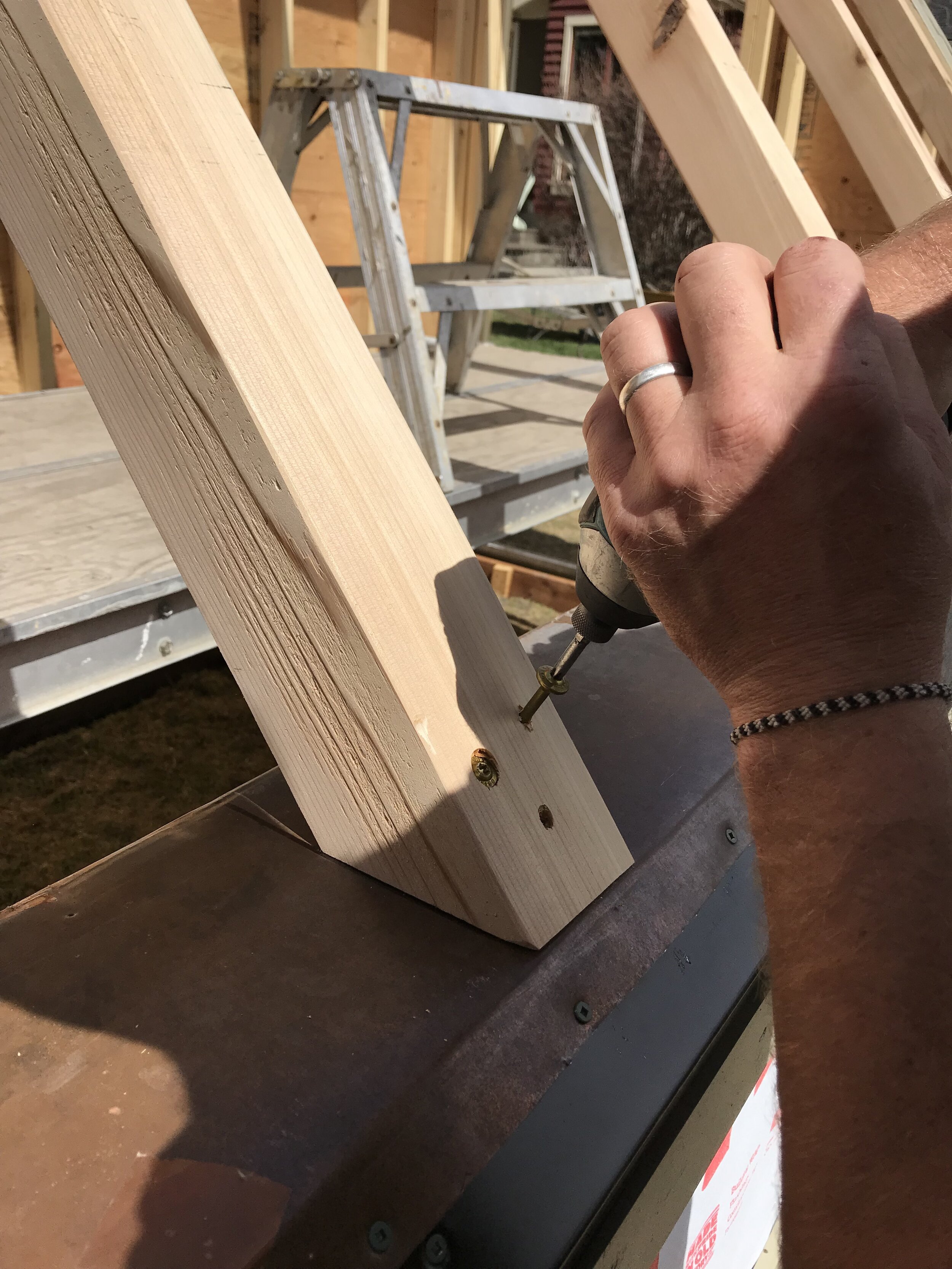
My husband foresaw that we may have a problem with a growing bed filled with heavy, wet soil pushing against our south knee wall and causing it to bow out. So we added an angle brace attached to a north-south floor beam (wrapped in vapour barrier to prevent leaching) to keep it all square. It seemed also that he top of our knee wall may be prone to rot if interior moisture accumulated there so we capped it in copper sheeting we salvaged years ago from a local store reno. And in preparation for the polycarbonate panels and a potential snow load on the south face, we secured cedar 4x4’s as strong, rot-resistant rafters.
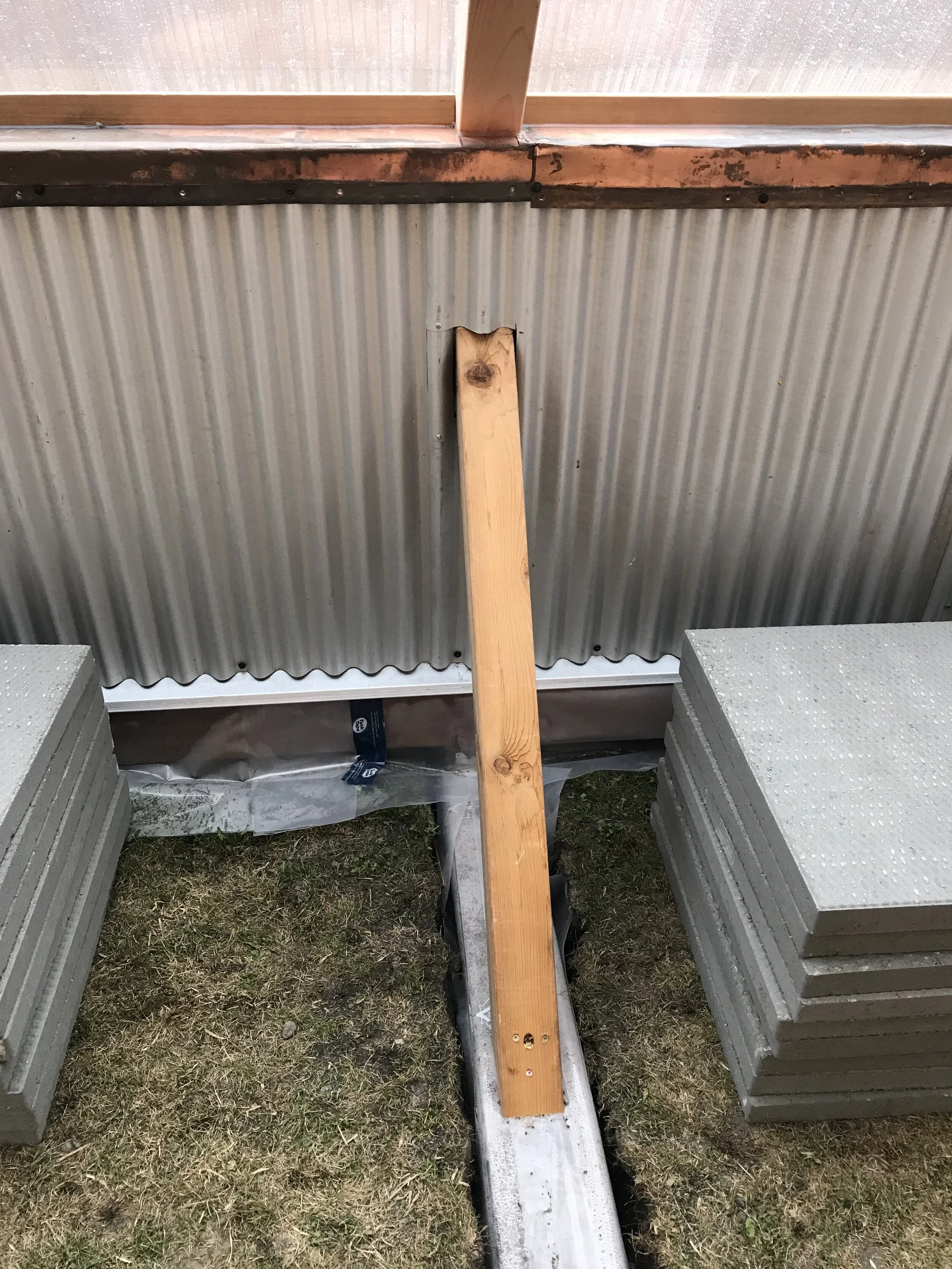
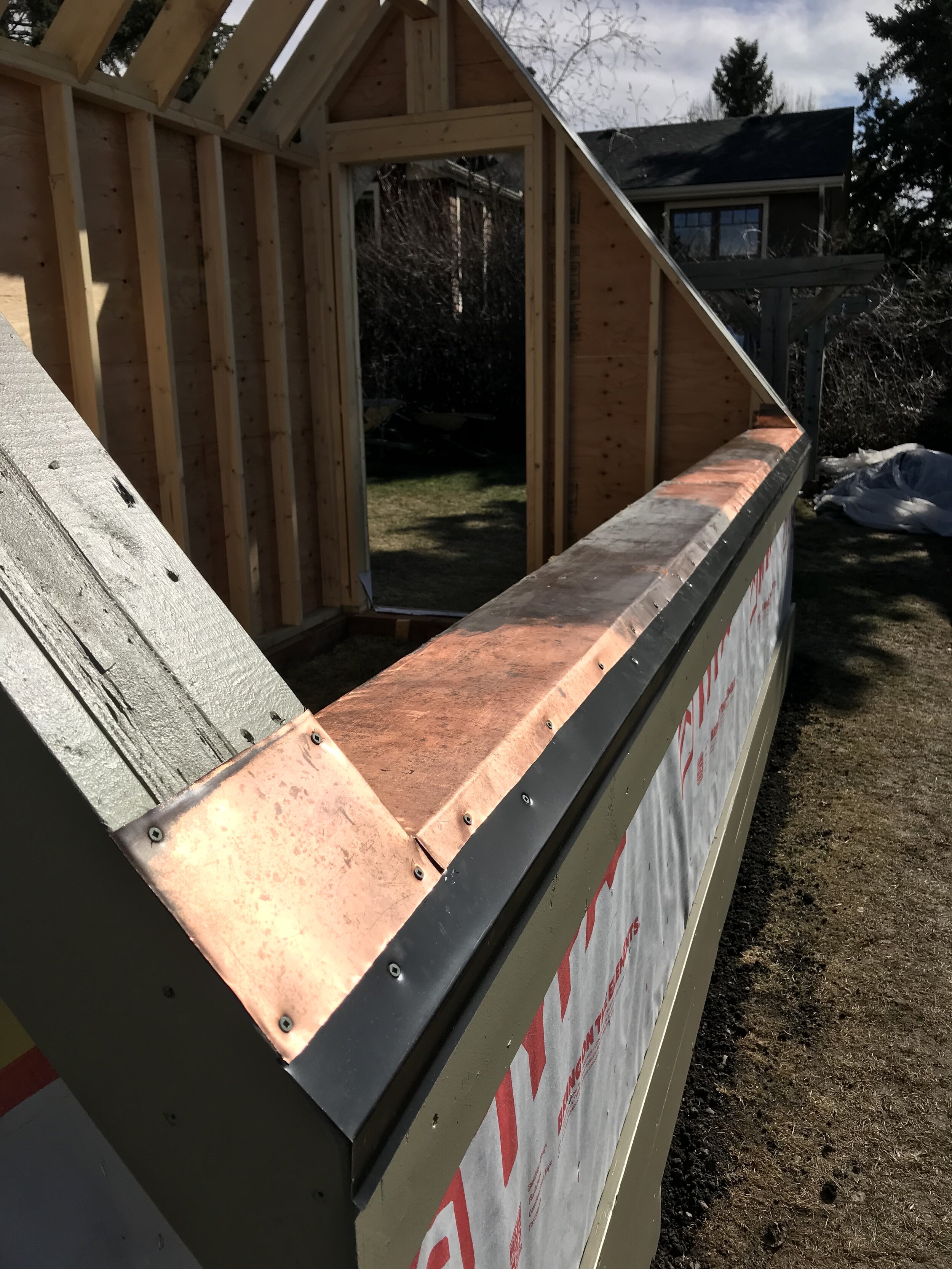
I’ve been struck by how much this process has resembled building a small home versus a greenhouse. The detailed carpentry knowledge my husband has, plus his many tools, has been critical in making sure each element will match up with the next and that the end product will look good, really endure, and function as intended. Considering the labour involved and the cost (more about that later!), I’ve found myself questioning why we’re not just tacking some plastic over a frame or joining old windows together for a little “hothouse”. After all, those methods can actually succeed in getting you tomatoes in Cochrane or fending off an unexpected frost. But I’m reminded of what we’re really trying to achieve here - the ability to grow food for a vastly longer period than our climate would normally allow. And to do it without energy-intensive inputs of heat. If we succeed in that, it will be well worth it!


So, onward we go…in the next instalment we should complete the build.


Backyard Greenhouse - Part 1: Setting the Stage

Welcome to a series of blogs about Cultivate Cochrane president Jackie Skrypnek’s backyard greenhouse building process. The intent is to share a realistic account of one couple’s experience to help inspire and inform other community members in their own season-extending, food-producing ventures.

Future site of greenhouse in February

Future site of greenhouse in February

My husband and I have recently embarked on a new little endeavour - building a home-scale passive solar greenhouse. Our existing greenhouse, a ramshackle structure of old rotten windows, is about ready to cave in, plus it’s only ever been capable of keeping a degree or two of frost off the plants inside. We figured it was time to create an effective three-season growing space using passive solar design and to really increase the amount of food we can produce ourselves. Like a microcosm of Cultivate Cochrane’s planned greenhouse hub, but with a maximum congregation capacity of about two people!

Passive solar doesn’t refer to photovoltaic panels; rather it’s a way of efficiently regulating temperature simply through smart design and choice of materials. (For a quick refresher, see our previous blog on the subject). So, design is where our backyard greenhouse project began. For us, a few constraints emerged which helped to quite literally shape what would and wouldn’t be possible for our structure.

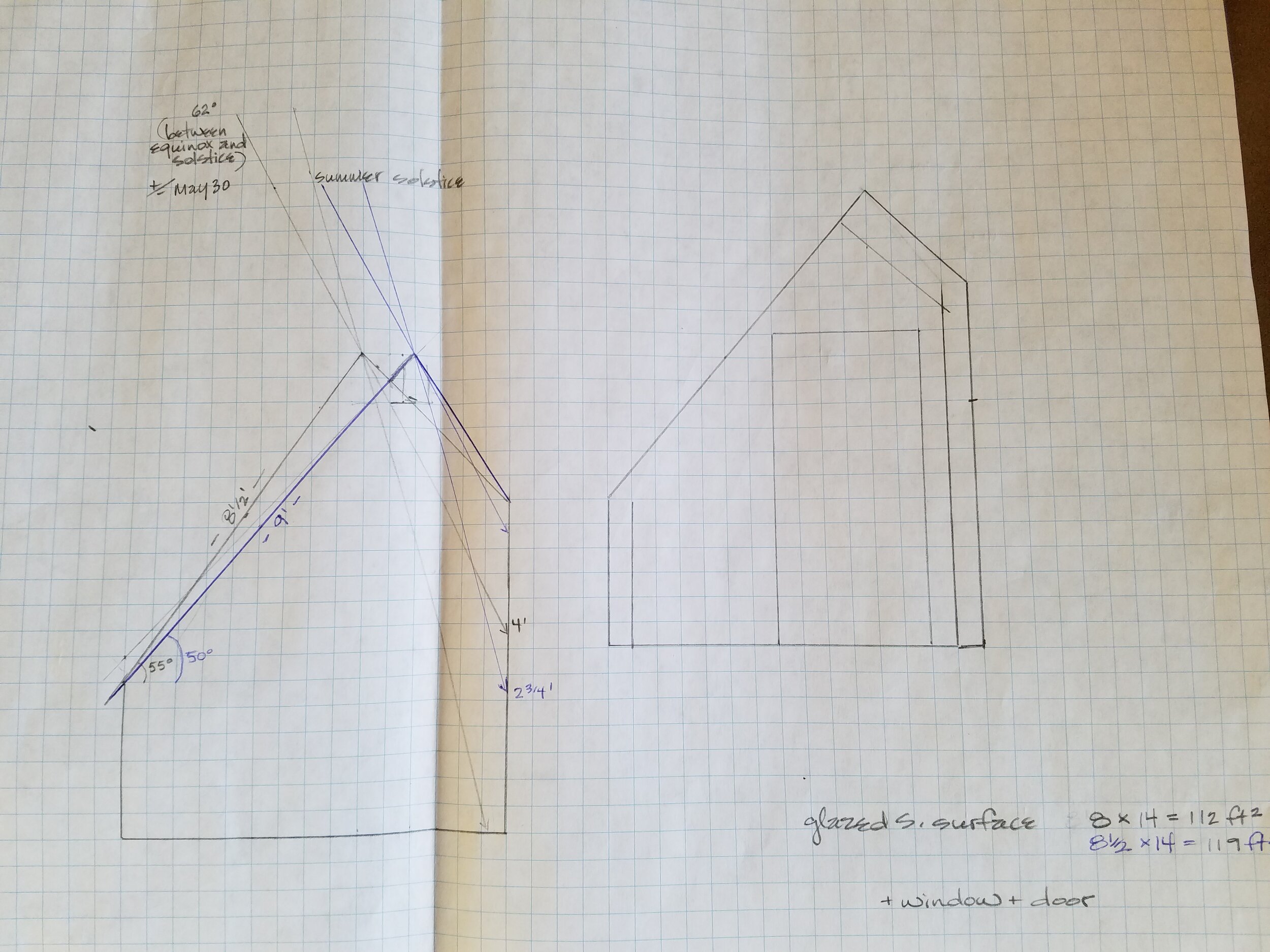
One of these was the size of the greenhouse footprint. To avoid the cost and hassle of a municipal building permit, we opted to keep the total area at or below Cochrane’s 107 square foot limit. We really didn’t have more room to play with anyway, given we planned to squeeze it between an existing tree and clothesline. A good rule of thumb for passive solar greenhouses is to shoot for at least a 2:1 length to width ratio so there is plenty of south-facing length to absorb the sun’s light and heat. We settled on 14” x 7.5” for a total footprint of 105 square feet.

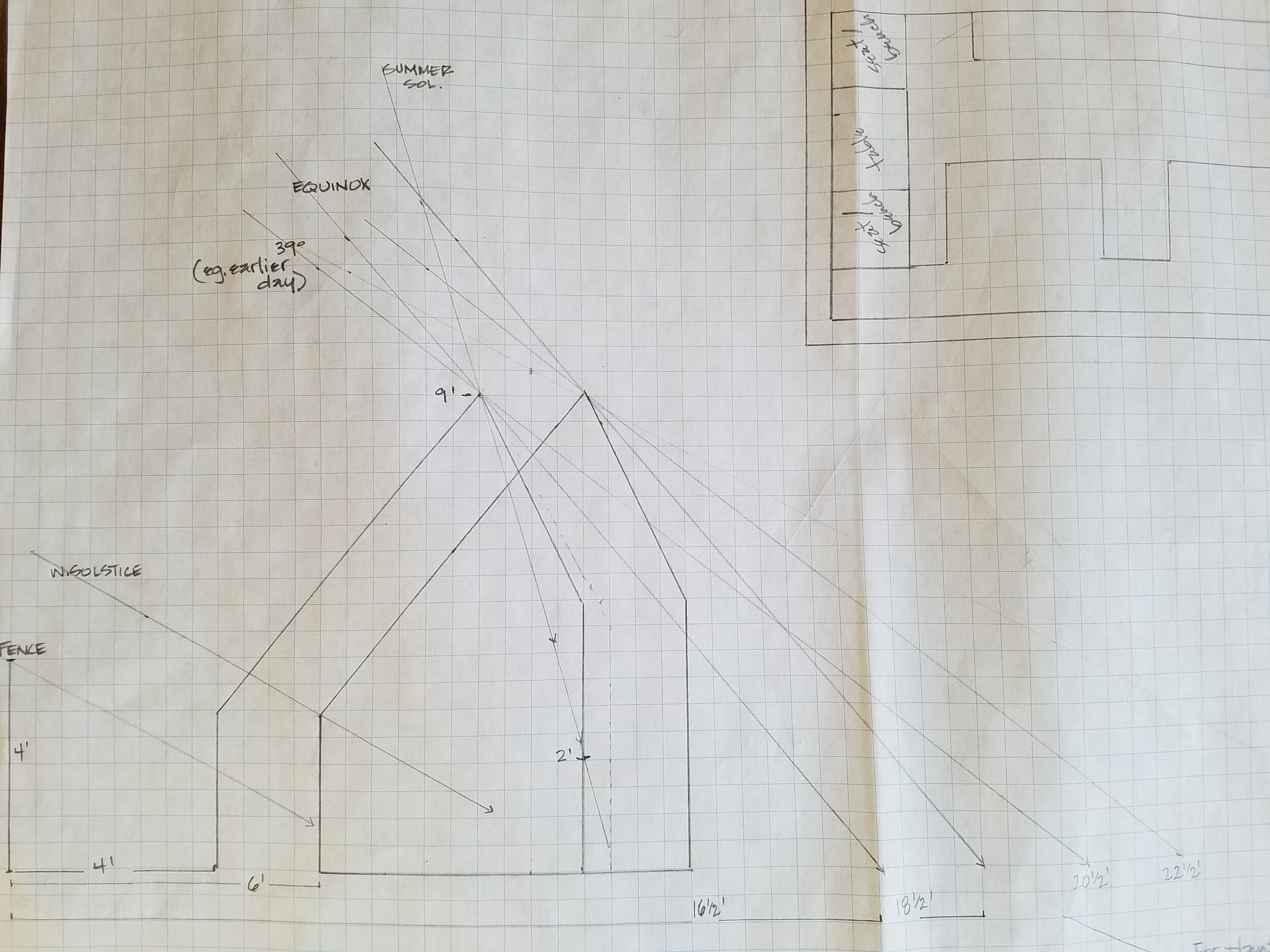
Another constraint was the height. If we went too high, the new greenhouse would cast a shadow on an established patch of perennial food plants including haskaps, sea buckthorn, strawberries, sorrel, lovage, rhubarb, etc. We simply weren’t willing to sacrifice those!

A design emerged through trial and error on graph paper, an attempt to reconcile everything from an effective angle for the south-facing glazing while not overshooting our height limit, wall thicknesses that would be insulative but not eat up too much of the already small footprint, various essential components like ventilation, and even how to get a full-sized door to fit.

20200224_135750.jpg

With me designing and my carpenter husband reality-checking a few dimensions here and there, by mid-winter we’d come up with a workable plan. Then we just had to wait for the frost to come out of the ground…and wait, and wait! Finally, by last week the soil had thawed and we got to work.

To be continued…in the next instalment, I’ll take you through our first stages of construction.

PASSIVE SOLAR GREENHOUSE DESIGN RESOURCES:

Some basic understanding is needed in order to create an effective design that suits your purposes. These resources offer a good start:

- passive solar greenhouse design course and study packages

- 7 Passive Solar Greenhouse Design Tips (YouTube)

Results are in!!!

We are thrilled to share with you some preliminary results we have received from our Community Support Survey we introduced a couple weeks ago. Your responses have provided great insight and have already directed our course of action for the coming weeks and months. We would love to reach an ideal sample size for the Cochrane Community (approx. 100 responses) and we are already more than half-way there! So please keep the responses coming, and pass this on to others. If you have any questions about the survey, please do not hesitate to get in touch. Stay tuned for online resources in the coming weeks!

To view the results, click here!

Want to add your input? Take the survey!

Want to add your input? Take the survey!

Adaptation, Resiliency, and Navigating a “New Normal”

What a whirlwind of a month it has been!  It goes without saying that the COVID-19 pandemic has changed our lives in pretty dramatic ways.  Many of us are working from home, or not at all. Children are completing their schooling via distance learning.  These social distancing parameters have turned our homes into the hub of our daily activities, and in many ways, have stretched our capabilities to adapt and adjust.

While riding this wave of general discomfort and uncertainty, it is important to recognize the many opportunities to enhance our ability to adapt and build resiliency within our families and communities.  I don’t know about anyone else, but my impulse to garden has never been stronger!

Since January, Cultivate Cochrane has been plugging away at our action plan and are likewise adapting to meet the more immediate needs of our members and the Cochrane community.  We recognize this is uncharted territory for all of us, so we would love to hear your insights to help focus our efforts in ways that will be the most useful to you. We have created a survey that will give you a glimpse of some ideas we have, and the chance to provide your own feedback and suggestions.  We would love it if you would take a few minutes and fill this survey out!    

While our line-up of spring workshops has been put on hold, we won’t leave you in the lurch!  Stay tuned to our website and social media platforms (Facebook, Instagram, Twitter ) for resources geared towards food, sustainability, adaptation and resiliency. 

We recognize this is a challenging time, no matter which way you spin it. We also recognize this is an opportunity to expand our skills and capabilities and to really come together as a community. We look forward to hearing from you and want you to know we’re here to support you every step of the way!

Here’s our team at our last board meeting - just saying hi and that we’re here for you!

Screen Shot 2020-03-31 at 9.06.20 PM.png

Partnering for Planters

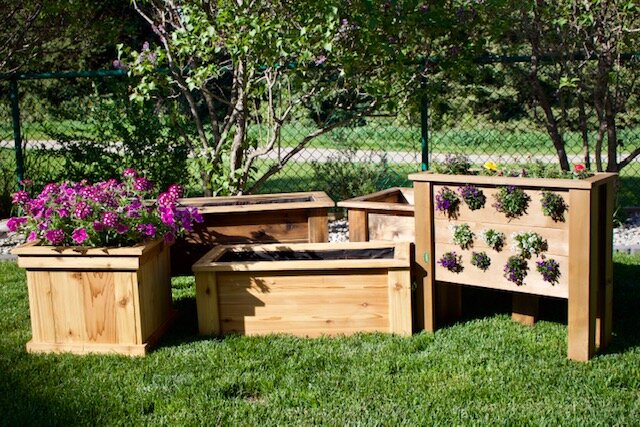
Cultivate Cochrane is happy to announce a new partnership with a small business in town! Mick Gee hand builds a variety of garden planters and unique home accessories for his home-based business Rustic Home & Garden Furnishings. He uses cedar for the planters so they are built to last, and reuses items like wine barrels in some of his other creations. One garden planter we especially love has growing space not only at the top, but also all down one face - we imagine filling the holes with herbs, nasturtiums, and salad greens for a beautiful and edible display!

image2.jpeg

Mick is really keen on Cultivate Cochrane’s vision (he remembers tomatoes warm off the plant and eaten on the spot with a pinch of salt in his greenhouse back in the UK) and is especially passionate about seeing kids involved in planting and growing. He has generously offered to donate 10% of any purchase made by a Cultivate Cochrane member back to our organization. So, check out Rustic Home & Garden Furnishings and be sure to mention that you’re a member if you place an order - every little bit helps us make our community greenhouse hub a reality!

A Glimpse of the Year Ahead

After a flurry of outreach, meetings and events in 2019, Cultivate Cochrane is poised for our next stage of progress in 2020. With some new members on our board of directors, we’ve laid out a path for the months ahead that will bring us ever closer to the passive solar community greenhouse hub we’ve all been dreaming of. Though strategic plans aren’t always the most inspired reading material, we think ours is actually pretty exciting! Here are the four main objectives we’ve set out to accomplish this year:

  1. CUSTOMERS: Conduct community engagement to determine the top needs of potential greenhouse customers and develop a program and education plan to meet these needs.

  2. FINANCIALS: Develop capital and operations budgets along with fundraising strategies for both.

  3. BUILDING: Secure a site for the greenhouse and customize a design for the building based on site partnerships and identified community needs.

  4.  MEMBERSHIP: Grow and retain society membership and develop a mature board of directors.

So we have our work cut out for us! We’ve also had some really promising discussions with leaders in our community about mutually beneficial siting of the greenhouse. It seems the concept of an innovative sunny gathering space where sharing and learning can happen around feeding ourselves is something that resonates with a wide range of community members.

The cost of produce is expected to continue to rise this year, the climate continues to shift, and we continue to have a very short growing season. Plus, the loneliness and disconnect people feel in these modern times seems to persist. So a sustainably-designed community hub where we can increase our ability to grow food locally is an idea whose time has come.

There is much to be done and we invite you to join us. It takes a village to raise a community greenhouse hub!

Well Done!

Sometimes you just have to give yourself a pat on the back — toot your own horn, right? At Cultivate Cochrane’s recent AGM we took a look at all of our efforts and accomplishments over the past year and we have to say that we even impressed ourselves with the list. We’ve been busy! And we’ve laid the foundation (metaphorically speaking) for our passive solar community greenhouse hub to come to fruition.

clint-adair-BW0vK-FA3eg-unsplash.jpg

Some of the highlights of our last 12 months:

  • Incorporated as a non-profit and developed policies, strategic plan and financial plan

  • Held a seat on Tri Site Advisory Group and presented to the group in a bid for inclusion in Tri Site plans

  • Met with numerous community groups, Mayor, councillors, Town administration, local developers, and businesses to explore support and synergies

  • Hosted "coffee chats" to connect with interested community members 

  • Offered Skill Build workshops ranging from tool sharpening to fermenting

  • Launched officially with a very well-attended passive solar greenhouse talk and tour 

  • Hosted a table at several farmers' markets

  • Took part in the Labour Day Parade with a wheelbarrow full of produce, handing out postcards along the way

  • Visited three local greenhouses gleaning pros and cons of each design

  • And much more!

Rob Avis explains features of his front yard on the greenhouse talk & tour

Rob Avis explains features of his front yard on the greenhouse talk & tour


With connections forged and groundwork laid, Cultivate Cochrane has some exciting possibilities to pursue in the year ahead. We’re ready to get busy and propel our plans to the next stage!

Warmth and Shelter

Late frost, early frost, snow in May and June, hail, wild winds, and opportunistic squirrels, rabbits, and deer. Just some of the reasons a greenhouse can make a whole lot of sense for growing food in Cochrane!


While I’ll always be happy to have a garden out of doors, some of those crops are routinely challenged and stunted by weather and animals beyond our control. By contrast, tomatoes, cucumbers, peppers, and basil happily thrive in the warmth and shelter of my greenhouse. And there’s nothing more pleasant than doing a bit of pruning, weeding, and watering in this sunny little structure on a cooler day or first thing in the morning when the air outside is still chilled.

A fledgling tomato in my greenhouse early June

A fledgling tomato in my greenhouse early June

Many people find themselves frustrated by Cochrane’s challenging food-growing climate and figure they’ll leave it up to BC, California, Mexico, or even South Africa to deliver our produce. But we can grow more than we think here if we choose the right plants and innovate ways to extend the season. Anything from a cold frame to my somewhat ramshackle greenhouse will add to how well we can begin to feed ourselves from our own backyard with the healthiest and most sustainable produce possible. The ultimate system for season extension in these parts is, of course, the passive solar greenhouse. 


Once our community greenhouse hub becomes a reality, we can add another layer to those greenhouse benefits - community connection and gathering! Until then, I’ll tend my tomatoes for another season and keep my fingers crossed for a frost-free September for the rest of the garden!

My attempt to shelter an outdoor tomato plant last September

My attempt to shelter an outdoor tomato plant last September

Cultivate Cochrane at the Cochrane Farmers' Market this Summer!

We are thrilled to be part of the Cochrane Farmers’ Market and the Cochrane Street Market this summer. Come and talk with us, fill out our community engagement questions and pick up some free goodies for your garden, window box or planter box or learn about our skill build workshops for the fall.

We are at the Farmers’ Market from 9:30 am to 1:30 pm on June 15, July 6 and 27, August 17 and September 14.

We are at the Cochrane Street Market from 5-9 pm on June 20 and July 18.

We hope to see you there!

AdobeStock_90290500-1200px.jpg